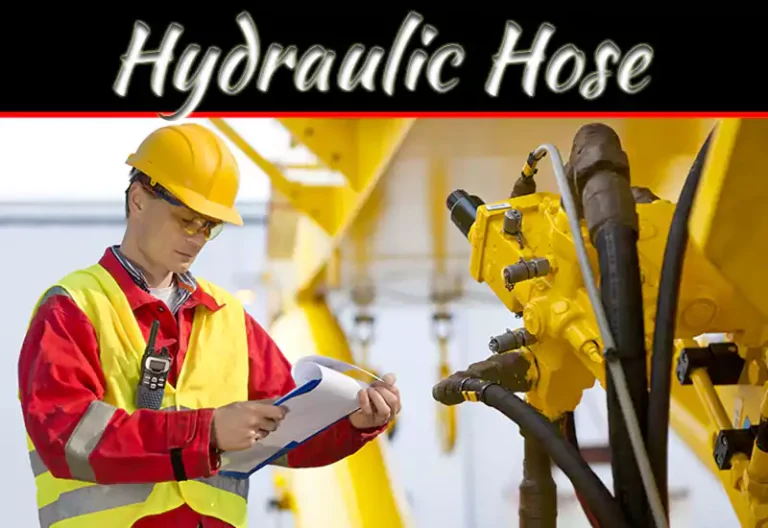

Image Source: Shutterstock.Com
Removing hydraulic hose fittings can be somewhat dangerous and slightly messy if you’re not familiar with best practices. Professional service members understand how to remove hose fittings safely and cleanly, and this is the method that everyone should use to avoid the possibility of harm and to minimize any cleanup that might become necessary. In this discussion, information will be provided on how to best remove hydraulic hose fittings when something needs to be replaced in your hydraulic system.
Why Hydraulic Fittings Need To Be Replaced
Hydraulic hoses are always under high pressure; in some systems, they are under extremely high pressure, especially when more power is needed to lift or move heavy objects. Because even the best hoses won’t last forever, they will occasionally rupture under this kind of pressure, which means they need to be changed.
When the hose requires changing, it’s usually necessary to change the fittings right along with it to ensure that you have a satisfactory fit. At the very least, when a hose has to be swapped out, it’s a beneficial idea to verify the condition of your fittings so that you don’t have another failure on your hands after you install the new hose.
Whenever a hose ruptures, there are only two choices. The first of these is to have a team member make the new installation, but this had better be someone extremely familiar with the nuances of hydraulic systems and with prior experience in changing hoses. Generally speaking, the second option is the much safer one, which calls for getting a professional to install the new hose and whatever fittings are necessary. If you need to find industrial hoses, it’s advisable to seek reputable suppliers or manufacturers who can provide high-quality products and expert guidance on installation and maintenance.
In the long run, this will probably save you many future troubles because you’ll know that you have a strong hose and safe fittings in your hydraulic system.
Safety Precautions To Take When Working On Hydraulic Systems
Most hydraulic systems are capable of accomplishing a task that requires enormous power, and the reason they have this capability is that they are frequently under high pressure, typically 2,000 pounds per square inch or even higher. One of the very first safety hazards associated with removing a hydraulic system’s components is forgetting to release that pressure before working on it.
This would be a significant blunder because hydraulic fluid is not only under high pressure but also very hot, which could cause any operator to become bruised, cut, or burned. Even if the machine is off, you must relieve the pressure in an accumulator that may be storing hydraulic energy.
One of the most common types of hydraulic system injuries is when a hose has a pinhole leak, and an operator runs a finger along it, trying to identify it. Hydraulic fluid can be injected into the skin through these pinholes, like a syringe. Safety precautions are also necessary when dealing with the couplings between low-pressure and high-pressure components. These two should not be mixed because hose or fitting ruptures will likely result in some kind of mismatch.
Another major area where safety precautions should always be taken is during normal maintenance. Hydraulic systems require periodic maintenance to keep them in excellent operating condition, which can help keep the machinery safe until the next maintenance checks.
This means replacing filters, checking for any leakage or worn hoses, coating cylinder rods with lubricants, and preventing contaminants from getting into the hydraulic oil. Another excellent safety precaution to keep in mind is just always to be aware of the potential for some kind of breakdown with hydraulic equipment and to treat it with proper respect whenever you’re working around it.
How To Remove Standard Hydraulic Fittings
The first step in removing and replacing hydraulic fittings is to protect yourself properly by wearing gloves and goggles since the hydraulic fluid is generally hot and under pressure. Next, release all hydraulic pressure in the system to avoid being sprayed. The precise procedure for releasing pressure will always be described in the owner’s manual.
Then, you should lay a sheet or possibly a pail below the hose that you intend to replace so that all fluid can drain into the pail. If there are any hoods or coverings that protect the hoses, these will have to be removed, but remember exactly what you removed so that you can replace it during reassembly. Now it’s time to wash off the connectors on both sides of the hose, and you’ll probably see lots of dust, dirt, and other kinds of grime that have built up around the hose.
To prevent the hose from getting clogged, remove all this material before reattaching everything. If the hose has been damaged in some way, you’ll need to have the correct replacement for it, and you’ll have to take the damaged one off and discard it. If the fittings are damaged in any way, or if the threading has become corrupted, ensure you have the appropriate fittings on hand before reassembling the hydraulic system.
How To Remove A Broken Hydraulic Fitting
Removing a broken hydraulic fitting calls for lots of patience and a little bit of expertise. One way that generally produces successful results begins with drilling carefully into the broken fitting so that you can remove the bulk of the broken bolt by doing so. As the wall gets scoured out, outward pressure gets relieved, and the tapered thread loses its tight relationship with the assembly.
In some cases, you will then be able to wind them out with your fingers simply. If anything gets stuck during this process, you might try using a thin piece of wire shaped appropriately to pull out the stubborn part of the fitting. Once you manage to get the old broken fitting out, you would be wise to use a tap to rethread the female part of the fitting so that you can rely on a good, secure fit when you replace the fitting.
Get Help With Your Hydraulic Systems
If you have trouble with your hydraulic systems or need help in replacing any of the parts that your equipment relies upon, you need to hire a company that will be able to provide quick service and also quality service that will meet your specific needs. Contact Sapphire Hydraulics today to have our technicians on-site.
Thanks for the tip that I should be careful when removing the protective parts on top of hydraulic hoses so that I can put them back in the same order. I’m thinking about getting spare hydraulic hoses for my equipment soon because whenever I inspect them, they seem to be the most vulnerable part of the whole machine. Getting replacements in case of an emergency would be important to have.
https://www.topdogparts.com/heavy-equipment-parts