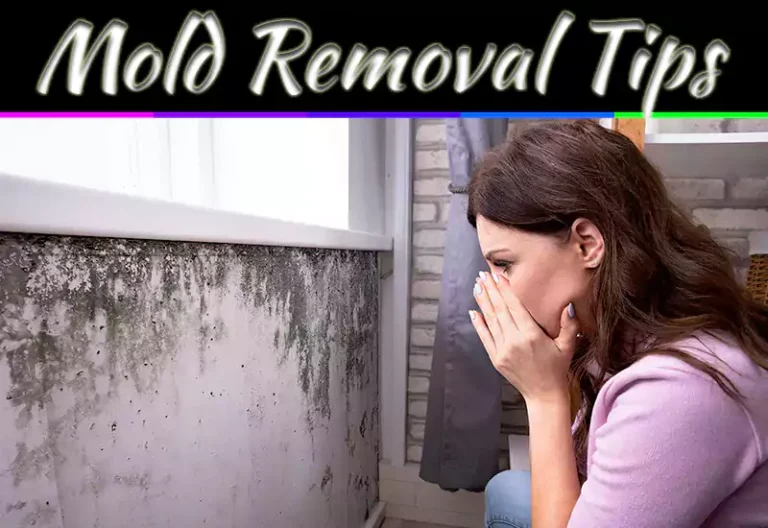

Mold is a fungus that reproduces by erupting microscopic spores into the environment. When it takes hold in your home, it’s not something that should be taken lightly. Not only is it unsightly and odorous, but mold can lead to the development of dangerous health conditions. So, if your home has mold, you must remove it ASAP.
This guide will help you do just that. Take a look at the ten tips below for getting rid of mold in your home.
-
Determine The Source
Mold can’t grow without moisture present. So, if mold is showing up in different places on your property, it’s crucial to identify the continuing source of the excess water or moisture.
For example, if you walk into a basement and smell a musty odor, you’ll likely find mold thriving there. This is a common sign of mold contamination. What this likely means is that somewhere, there’s a leak that’s keeping materials such as wood and plasterboard walls wet. Another possibility could be poor ventilation or groundwater seeping through the understructure of your home.
Until you find the source of the moisture and remedy it, your mold problem will continue. The best solution in this case is to call in a team like Eco3 Environmental to find the source of the mold infestation and remove the mold.
-
Dry Out The Area
Before you can begin the mold cleanup process, you’ll have to dry the wet or damp areas completely. Logically, if there is standing water, you should remove this as quickly as possible. To begin, open up all of the windows and use fans or, better yet, hire an industrial dryer and dehumidifier. The faster you dry the area, the less time mold has to grow.
-
Wear Protection
If inhaling mold spores is not on your list of things to do today, you need to protect yourself before you start cleaning the mold. To avoid breathing in spores, all you need to do is purchase an inexpensive respirator to wear over your face. This should cost around $15 or $20. Ideally, it would help if you opted for an N-95 respirator with removable cartridges, which will trap mold spores.
Be sure to wear rubber gloves to protect your skin from the mold as well as from the chemicals you’re going to be using to clean it. Alternatively, you can use a pair of utility-grade disposable gloves if you don’t want to keep your soiled gloves after the entire cleaning process. If the molding is extensive, your gloves may not survive cleanup, so cheap ones may be better. It also wouldn’t hurt to wear goggles to prevent your eyes from becoming irritated. If the mold is a serious problem throughout your home, you may want to go ahead and wear a protective suit to cover your skin.
-
Avoid Covering Up The Problem
When mold shows up in your home, it can seem like an overwhelming task to get rid of it. You may want to hide it with paint or caulk instead of killing it. Unfortunately, this isn’t going to solve your problem. The source of the moisture must be identified, or the problem is going to repeat itself.
Paint applied over mold is likely to peel anyway, and the air will continue to be contaminated, even if you can’t see the mold anymore. It won’t be long before it reveals its hideous visage once more.
-
Tackling Mold In The Basement
Basements can be a haven for mold growth, as mentioned above. After you’ve dried out any stagnant water and geared up in your protective wear, you’re ready to tackle the (likely) big job of cleaning up the mold. Here’s what you need to do to get started:
Visit: https://uwrgtoronto.com/mold-removal-vaughan/ to find more information about mold remediation and removals.
-
Know When It’s Time To Call A Professional
If you find extensive damage from contaminated water and areas of mold that are larger than 10 square feet, it’s best to hire a mold remediation professional such as Pure Maintenance Cascades Mold Removal to do the job for you.
-
Examine Your HVAC System For Mold Contamination
Search for mold in your ventilation system. Check inside the air ducts for mold growth or a musty smell. Have your air ducts professionally cleaned right away if you suspect contamination.
-
Do Minor Jobs Yourself
If you are able to address the mold issue yourself, please start by relocating all contaminated items from the area for inspection. If you have moldy boxes, throw them away. If you find moldy clothes, wash them.
If your basement is carpeted, you’ll need to steam clean or replace it—whichever fits your circumstances.
To clean tough surfaces, combine a gallon of water with a cup of bleach. Apply this to the surface and allow it to sit for about 15 minutes. Now, thoroughly clean the area to your satisfaction! After you’re done, rinse the area with clean water.
Now that you’ve completed the necessary tasks, it’s time to enhance the ventilation in your basement. Use fans and dehumidifiers to get the air flowing and the moisture out.

-
Getting Rid Of Mold From Wood Flooring
To begin removing bleach from wood flooring, you need to make sure you choose the appropriate cleanser. You’ll need a chlorine-bleach solution with a 10:1 water/bleach ratio. You can pick this up at your local hardware store.
Spray this solution directly on the wood floor, and allow it to soak for 10 minutes. Please use an old rag or towel to gently remove the mold, and dispose of it once you’re done. If there are spots where the mold remains, use a scrub brush to remove it from these stubborn areas. Finish the job by rinsing the floor with chemical-free, clean water.
If the mold has penetrated the wood, it may need to be sanded down and refinished or replaced. If you’re unsure, it’s best to consult a professional for advice.
-
Removing Mold From Walls
Bleach is also your friend in removing mold from walls. Just mix up one part bleach to three parts water in a spray bottle and thoroughly spray down wherever you find mold growing on your walls. Let the bleach soak in for a few minutes, and then use a scrub brush to remove the mold.
While this is a beneficial temporary fix, it’s possible that the root of the mold is still going to be present inside of your drywall. To effectively eliminate mold at its source following surface cleaning, apply undiluted white vinegar to the affected area and allow it to dry thoroughly. at the root after cleaning up the surface, spray undiluted white vinegar onto the area, then allow it to dry. There may be an odor from the vinegar, but it should help solve your mold problem.
-
Removing Mold From Your Home’s Exterior
Don’t let mold ruin your home’s curb appeal! Mold on the outside of homes is common in regions with high humidity. To treat the mold on your home’s exterior:
-
Clean Out Your Gutters
Gutters are home to decaying leaves and the like, which make them a likely place for mold and mildew to grow. Decomposing debris can clog the downspouts, causing water to spill over the gutter’s edge. This overflow can then make its way down your house’s siding, where mold begins to grow. Make sure you clean your gutters regularly to prevent and remove mold.
-
Clean Your Exterior Siding
Wood and wood fiber siding are among the most vulnerable materials to mold and mildew. Mold is likely forming on the north side of your house, which is resistant to sunlight.
Home improvement guru Bob Vila recommends never using a power washer to clean the outside of your home, as it’s too powerful and can peel off paint or blast through the wood siding. Instead, he recommends a washer called the Pivot Pro, as it should be safer. You fill the Pivot Pro with an all-purpose mold and mildew cleaner and hook it up to your garden hose.
You can also use its brush head to scrub mold off of your deck or porch.
-
Eliminating Mold In The Bathroom
Seeing discolored grout in your shower isn’t just unsightly; it can also be dangerous to your health. Bathrooms are the perfect breeding ground for mold to grow, as they’re usually damp, dark, and warm.
To clean a moldy shower, gather rubber gloves, an old toothbrush, vinegar, a scrub brush, and equal parts of water and bleach in a spray bottle. You may also want to purchase an antifungal surface cleaner such as Clorox Antifungal.
Begin by applying the antifungal spray thoroughly throughout the entire shower. Then, use a sponge to wipe the mold off of the tile and porcelain. However, this may not get the mold out of the grout. To tackle this issue, spray the bleach solution over the grout and let it sit for a few minutes. Next, respray the area and use the old toothbrush to scrub the mold out of the grout.
When this is finished, spray a coating of undiluted vinegar over the grout to eliminate mold spores, and allow it to dry.
To prevent having to repeat this process regularly, remember: prevention is key.
- To reduce the humidity in your bathroom, install an exhaust fan if you don’t already have one.
- Squeegee and then wipe down your shower with a towel after each use so that mold doesn’t have a chance to grow.
- Spray vinegar on your shower after wiping it dry. If the smell is too much to handle, try adding a few drops of your favorite essential oil to the spray bottle.
- Do a regular clean of your bathroom every week.
-
Consider A Natural Approach To Mold Removal
Perhaps you’re not a fan of chlorine bleach or any strong chemical for that matter. If you’re looking for some natural alternatives, here are several you can try:
-
Hydrogen Peroxide
So, here’s the deal. Wherever it says to use bleach above, you could use hydrogen peroxide instead. You should use a 3% concentration of the solution and spray it wherever you find mold. Scrub the area down, just as before, and rinse it clean.
-
Vinegar
Vinegar has already been mentioned above, but it should be noted that it’s a completely natural, non-toxic solution for mold elimination on its own as well. White vinegar has the power to clean, deodorize, and disinfect. Spraying it in full concentration and leaving it on the moldy surface is the best way to make sure mold is eliminated.
-
Baking Soda
Isn’t baking soda one of the handiest ingredients one can have in their kitchen? Baking soda has the power to absorb the moisture that attracts mold. To make a heavy-duty, mold-removal paste, mix two parts baking soda with one part white vinegar and one part water. Stir it up until it becomes a thick paste. Spread it on the moldy areas generously and allow it to dry. Now, scrub away the mold and stains, and rinse the residue away with clean water.
-
Tea Tree Oil
Are you familiar with essential oils? They’re the most potent parts of a plant, derived from the seeds, roots, flowers, and stems. The essential oil that is helpful in the removal of mold is known as tea tree oil. A natural fungicide, tea tree oil helps prevent mold spores from returning.
To use tea tree oil for mold elimination, combine one teaspoon of it with one cup of water in a spray bottle. Shake well so they blend thoroughly. Then, spray this mixture onto the mold, and leave it there for an hour. Wipe away the remnants of it with a dry towel.
Final Thoughts
Whether you choose to eliminate mold naturally or not, it is of the utmost importance to get rid of it in a timely fashion. There’s no use covering up the problem or ignoring it, as you’re only enabling it to grow and potentially impact your health. Be sure to take a good look at your situation to see if it would best serve you to hire a professional. There’s nothing wrong with admitting that you need professional help to remedy the problem. After all, your family’s health should be the number one priority.
Hey!
Thanks for this informative blog. I have been suffering the internet for a while to get some quality solutions for the mold situation which I am going through at home.
Do check out Jarvis Restoration https://jarvisrestoration.com/ who helped get rid of molds.
This is such a great resource that you are providing and you give it away for free. I love seeing blog that understand the value of providing a quality resource for free. https://www.topqualitymalaysiangloves.com/