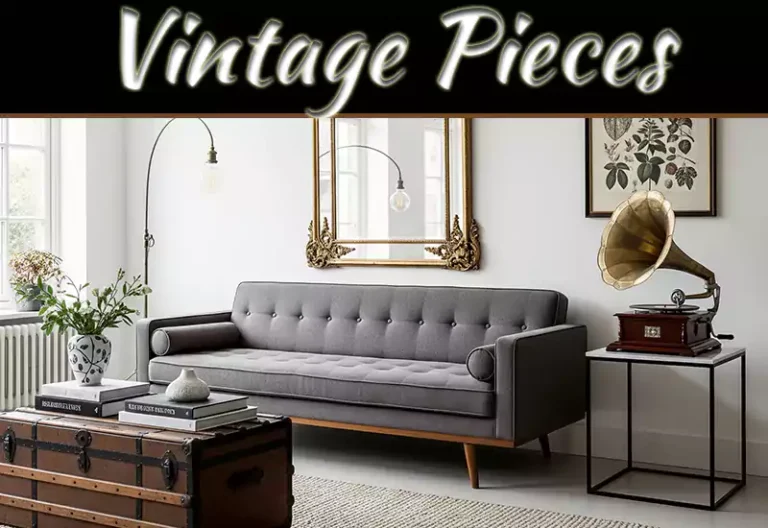

Can old charm meet modern style?
You walk into your living room. It’s neat. Clean. White walls. The sofa appears to be straight out of a catalog. The environment is nice, but there’s something missing. You can feel it. No warmth. No story.
Now imagine the same space. Same sofa. Same walls. But add your grandmother’s old trunk as a coffee table. Suddenly, the room feels alive. It has soul. It whispers, “I’ve been here before.” I’ve seen things. That’s the magic of vintage.
But here’s the tricky part. How do you mix it without making your home look stuck in time? Is it possible for the old and new to coexist harmoniously? The answer: yes. In fact, when done right, they balance each other beautifully.
This isn’t about stuffing every corner with antiques. No. It’s about choosing carefully and blending thoughtfully. It’s about telling a story—your story—with pieces that bridge yesterday and today. Let’s talk about how to do it.
Start Small: Easy Vintage Touches
There is no mission to declare. The collection consists of just small shots of vintage, like behind-you-sipping-tea invitations. It can be the twisty brass desk lamp your friend quit using.
It’s a casual, well-loved leather stool that keeps scooting in from the garage. This is a tiny, gray-framed snapshot of someone else’s trick-or-treat night from 1955.
Trade a sameness rug for a wild, tiny rug from your grandmother’s travels. Even a tiny coir mat at the front door waves like a slightly crooked hand saying welcome.
These small moves shift the story beautifully. They nestle right beside your favorite, barely-changed-sized Ikea shelves, like the heartbeat inside a cozy wooden house.
Balancing Act: Avoiding The Clash
Common mistake: flood the pad with Grandpa’s stuff—rosettes everywhere. The penchant is being extended to every square. Kitchen. Bath. At lunch, the look is pure open-box fire sale. Don’t do this.
Instead, stage vintage-like, precious toppings. Let the air and light hold the room’s structure. Build on cool bones: tinted gray plaster, matte white walls, and simple slab tables. Place the treasure besides, within sight but not in every view: one golden mirror sparkles, one alert blue vase hums, and one wicker sideboard gestures.
Think canvas and painter. One space creates calm. One vintage marking breeds intrigue. Where quiet ends, nostalgia begins.
Texture Tells The Story
Modern décor? Smooth. Glossy. Sharp edges. Vintage? Rough. Imperfect. Worn. Put them together, and something magical happens.
Picture this. There is a glass coffee table in the room. Beside it, there was a weathered wooden stool. Imagine a vintage velvet armchair against a concrete floor. The contrast is delicious. It makes you stop and look. It makes you feel.
Textures tell stories. They remind us of time, people, and life. They invite you to touch. To linger. And that’s what makes a house feel like a home.
Colors: Striking The Right Notes
Colors are not solely harmonious; they can also evoke discord, resembling the hissing of alley cats if one is not cautious. Core new homes typically buzz in a soft neutral band—whites, grays, beiges, and sometimes a tough black. However, old houses appreciate a bold symphony of colors such as raging army green, roaring mustard, and burgundy that exudes bravery.
Choosing the right duet is the magic recipe. Start with a gray or white stage and sneak in one riotous vintage singer, like a scarlet velvet pillow. It catches the whole room’s attention. Flip the playlist: a kitchen wailing in electric white?
Toss in a dignified patina 1940s credenza and a time-soft green fruit bowl. The room exhales. Ease the tension without losing your grip. Rule: harmony, not traffic jams. Always.
Statement Pieces: The Showstoppers
Every room is a stage that needs one lead: the vintage showstopper. Everyone can assemble room after room of ordinary shelving, but then in strolls that ivory-crystal chandelier, glinting like a soap-opera star in a stark white dining room.
A gigantic vintage mirror in tarnished gold: its unpredictable finish finally reflects both the minimal room and ghost whisperings of the past—a hardwood credenza from 1960, frozen on one angle.
Place nothing sizzling or new in the spotlight. Let it alone bow and shine; the harmony will happen right after.
Breathing New Life: Modern Updates
Sometimes vintage needs a little help. The chair was covered in dust. The dresser was chipped. There is a lamp with wires older than you. Don’t toss it. Please fix it.
Reupholster the chair in a bold fabric. Repaint the dresser in matte black. Rewire the lamp with modern fittings. Suddenly, it’s safe, stylish, and still carrying that old soul.
This is where vintage shines—it’s adaptable. You keep the story but give it a fresh chapter. Plus, it’s eco-friendly. Less waste. More heart.
Little Details, Big Charm
Accessories are like seasoning. The amount of information is overwhelming. Just right, and it’s delicious.
Try this: Stack modern books beside a vintage clock. Place a sleek vase next to an antique brass candlestick. Mix a shiny new tray with an old ceramic bowl.
These tiny contrasts keep the eye moving. They spark curiosity. They whisper stories without shouting. And the best part? You can swap them out anytime if the look feels heavy.
Vintage Art: A Wall With Character
Blank walls are boring: Art changes that. And vintage art? Even better.
A faded oil painting: A retro poster. Old black-and-white photography. Hang them against modern white walls, and they stand out like treasures.
Framing matters too: Put vintage art in a modern frame, and it instantly looks at home. Or mix it with modern prints on a gallery wall. The clash creates energy. The wall becomes a conversation piece.
Entryway: First Impressions Matter
The entryway is where a home rolls out the first welcome mat. Nail the entrance, and guests catch the feels without even picking up a coat.
Imagine a rustic bench waiting for a couple of vintage coat hooks to be home. An antique mirror bounces a little light, while a bold, patterned rug cushions the stepped-in moment. These little gestures whisper, “This home is full of stories, and—yup—someone cares.”
Drop a modern pendant light overhead, set it to warm, and the whole tableau gains that brilliant hush of togetherness—old and new high-five, setting the pace that carries through every room.
Kitchens And Dining Rooms: A Match Made Easy
Sometimes the modern kitchen glints a little too brightly, a little too chill. Enter vintage, in style.
Dress up a glossy island with battered bar stools that carry memories, invite vintage-style pendant lighting on a twisted cord, or lean open shelves of reclaimed wood against a high shine. Suddenly, the gloss warms and a gentle patina settles in.
Slide into the dining room for a finishing touch. Start with a heritage table that isn’t afraid of nicks, then crown it with Scandi chairs—unfinished wood and metal. Flip the script, and lean a modern slab against vintage surrounds. Don’t forget the china cabinet: a parade of amber glass or close-knit china spices up the look. Function is important, but good feelings are even more so.
Bedrooms: Soft, Subtle Vintage
Bedrooms whisper first, and they need a gentle voice. Vintage accents can hush the room, but plan a whispered blend.
Think of soft, inviting touches. A pretty wrought-iron bed frame. A gently worn dresser with stories in every scratch. A family quilt, lovingly stuffed full of memories. Picture an old lamp, graceful in its vintage style, perched on an otherwise clean-lined nightstand, glowing softly.
Bigger, louder vintage accents can steal the quiet you want in the bedroom. Keep your color palette soft, your fabrics inviting, and your pieces chosen with care. You’re after cozy charm, not stylish shouts.
Outdoor Vibes: Vintage Under The Sky
Good news: the charm of vintage isn’t indoor-only. Patios, balconies, and tiny backyard gardens crave the same quiet warmth.
Prop a time-worn wooden bench against a wall. Add a pair of wrought-iron chairs, whimsical and graceful. Hang gentle, glowing string lights overhead. Scatter old lanterns on a weathered table.
Let chipped ceramic garden pots overflow with cheerful blooms. It’s a down-to-earth kind of magic. The outdoors is a playground for you to try. Toss clutter rules and see what feels happiest.
Green Side Of Vintage
Honestly, loving old stuff is also loving the earth. Each secondhand find means one less thing in the dump.
Suddenly, the dresser or bookcase that might have ended up in a landfill is now a cherished accent piece, and you are rejecting large factories, extensive shipping chains, and excessive packaging.
Your space isn’t just lovely. It’s a thoughtful, low-impact statement of affection for the planet.
Conclusion
So, can vintage and modern live together? Absolutely. In fact, when they do, something magical happens.
It’s not about following a checklist. It’s about pulling together a comfortable scene. Keep your main pieces current, then toss in a vintage treasure. Start with one corner if you’re not sure—layer textures. Try a new color. Pick one eye-catching item for each room.
Your place shouldn’t feel like a replica of an ad. It should feel like you, a mash-up of journeys you’ve crossed and the route still ahead. It’s a conversation of side tables, pillows, lights, and colors.
So, go ahead. Rescue that dusty mirror from Grandma’s attic. Rescue those weird thrift-store chairs. Set them in that white, minimalist box you’ve got. Notice your room’s quiet, instant applause. It’s not just a look—it’s attitude, warmth, and a wink at the past.