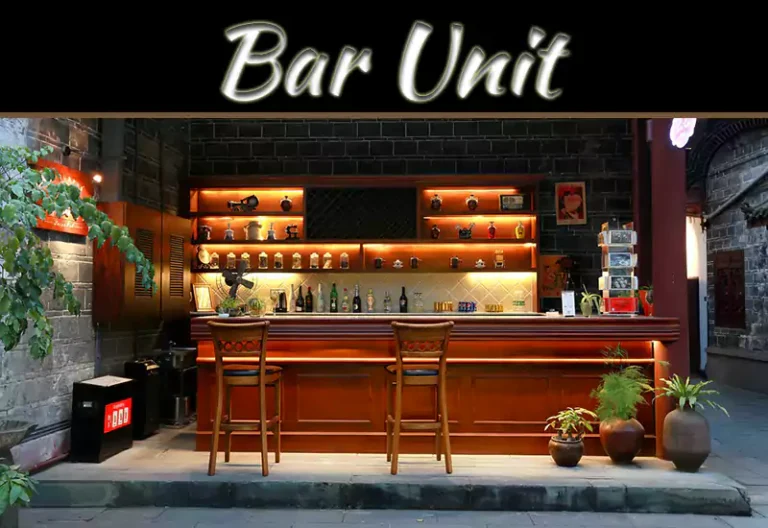
Foot rails enjoy a place of importance in any bar or pub due to their contribution regarding aesthetic appeal and functional value. Bar foot rails offer an area for patrons to rest their feet. Foot rails also provide a crisp and clean look to your bar while complementing your decor. Of course, there are many variations you can opt for. Picking the right one is easy enough as long as you do your research and consider your choices carefully. The ideal foot rail can do wonders for your bar, but most buyers don’t put too much thought into it. Here is what you should consider before choosing a bar foot rail that is perfect for you.

To accommodate the design in the best possible way, the perfect time to start planning for a foot rail is before you start building your bar. The plan for the foot rail should be made as you prepare for your bar. However, if your bar is established, worry not, as you can still work around it. If you have some experience, you can do the fitting and installation yourself, but it’s best to let professionals do it. However, if you have never handled a drill or a hammer before, you (and your bar) might be better off calling for some professional aid.
The first step is to decide where you want the rail to be built. Next is to measure all sides of the area where you plan to install the rail. If your bar has a curvy design, remember to account for that. To reduce errors, individually measure each side of the bar that will get a railing fitted. After adding up those numbers, you can get a picture of the approximate length of the foot rail. Depending on the measurements of the bar’s sides, it is always wise to purchase slightly more tubing than needed; any excess can be sawed off later.
Any bar foot rail consists of external parts like the tubing, brackets, elbow joints, and end caps. As these components are customizable, the combinations you can put together are innumerable. Based on the size of your bar, you can get tubing of various lengths. You can add visual appeal to your bar by opting for popular metal finishes like satin-brushed stainless steel, polished brass, or polished stainless steel. Consider that the material and finish should be chosen based on its maintenance level. While brass lends a traditional feel, it can deteriorate over the course of time. On the other hand, stainless steel adds a modern look and is much more low maintenance than brass. Also, polished surfaces display shoe marks and dirt quite prominently rather than satin finishes.

Brackets are metal pieces that support the tubing and hold it in place. Brackets are the parts that withstand a majority of the weight, so make sure to buy them crafted with quality materials. There are three kinds of brackets: bar mount, floor mount, and combination. As the name suggests, bar mount brackets support the tubing by mounting only to the bar. This kind of bracket adds too much pressure at one spot. So, to add extra support, back access screws are used to bear the force better. If you don’t have access to the back of the bar, then you cannot use this style.
Floor mount brackets provide tubular support by mounting only to the floor. This bracket style eliminates the need for access to the back of the bar and alleviates any added risk that comes with installing brackets only on the bar. A significant bonus is that you can adjust the distance between the bar and the foot rail with floor-mounted brackets. You can also customize the height of the bar foot rail (gap between the floor and the foot rail.)
The most popular style of bracket is a mix of these two bracket styles: the combination bracket. Combination brackets mount both to the floor and the bar, distributing the force evenly while looking pleasant to the eyes. As an added advantage, it shares all the benefits of floor-mounted brackets. For a coherent visual story, choose the tubing and the brackets in the same color and finish. However, mixing and matching is always an option if you want to be bold. Depending on the length of tubing required, calculate the number of brackets you might need. It is advisable to have a minimum of two brackets per tubing for the sake of both symmetry and support.

Elbow joints are tubing that bends at 90 degrees. It is useful when the bar’s perimeter flexes at a 90-degree angle. Again, you can keep the material and finish consistent, or you can change it up. Elbow joints are also used to hide the spliced joints of the tubing. The number of corners in your bar determines how many elbow joints you need.

End caps are used to protect your patrons and embellish your bar’s décor. Adding a sense of elegance to the whole bar foot rail, end caps are available in many designs, which range from ordinary to ornate. End caps also come in different materials and finishes so that you can pick the same kind as the tubing for a coordinated look. Fitted at each end of the tubing, they are relatively easy to place and provide the finishing touches to your bar foot rail.
The best way to choose each part of a bar foot rail is to pick the material and a finish that suits your décor the most. You would have designed a bar foot rail that enhances the bar’s décor and keeps patrons happy and comfortable by weighing your choices for each component and considering how they pair.