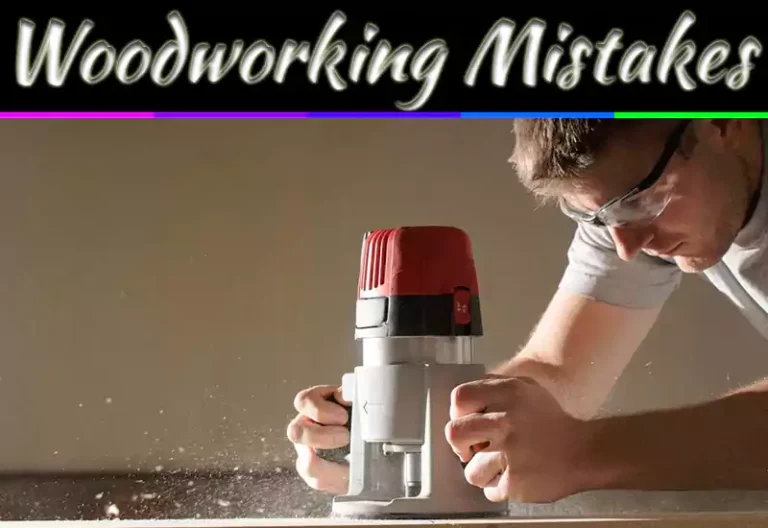

Woodworking is an art that requires your full concentration to achieve it. Being a beginner, it’s common to make mistakes because every master was once a beginner. This article will help you understand the basic woodworking mistakes you could make; these errors will save you from wasting your time, energy, and money. Let’s take a moment to review some common tips for woodworkers before delving into the woodworking mistakes.
Firstly, it’s acceptable to allow time for the output to be flawless. When you have started woodwork that involves more cuts and design, take a break in between and relax. Those cuts will need a steady hand and mind; taking a break will help you achieve the beautiful curves on your wood. Woodworking tools can be expensive, so it’s important to conduct thorough research and select those that are truly suitable for your needs before making a purchase. Patience is all it takes as a woodworker, which is also a tip recommended by Bill Baum from theedgecutter. Stick to these guidelines and continue reading the article to understand the common mistakes a bit more, which you can prevent while working.
-
Unhygienic Environment
A healthy and clean environment is significant, be it your home or workplace. Woodworking is a masterful art that creates a lot of dust, so be sure to clean up after. You can’t clean your workspace now, but you can after work.
It is advisable to have two separate sections in your workplace for building and finishing the work. The dust settling in between the wires of the machine and router bits needs to be cleaned first, and later on the floor. Select the best epoxy resin to meet your needs when sealing projects or floors. The dust collector will be your handyman to collect dust after the work is completed. Working in a dirty environment should be avoided, as a messy space can lead to further complications.
-
Lethargic About Your Safety
Compromising your safety is not worth any work. Woodworking, as you know, requires many tools that are sharp and are capable of hurting you. Once you are aware of the basic steps in woodworking, the confidence in you will let you start the work without the safety gear on. This is why failing to wear safety gear is considered a common mistake. Be it a beginner or a pro in woodworking, starting a huge project, or just cutting the wood, safety gear is a must.
The safety gear consists of hard (of good quality) hand gloves, safety glasses, and headgear. Ensure you have this safety gear on you before you start working. Heavy-duty and sharp equipment can unexpectedly cause injuries, so it is best to avoid such surprises.
-
Lack Of Knowledge About The Tools
Trusting everything you see with the naked eye can lead to mistakes. Yes, it is the most common mistake you could make in woodworking as a beginner. Always have the spirit level next to you. You have enough knowledge in woodworking, and you will know how difficult it is to make a balanced table or cut your wood to a certain angle. After all, all your efforts are to attain precision and a good finish for your products.
As you work, taking a minute to review your progress will help you feel more confident about its accuracy. Your heart and eyes work together to help you believe that your work is correct. But that isn’t going to help you get the perfect finish. You must check your work’s angle and ensure the surface is flat and even. The spirit level will help you achieve it. Though you are confident of your work, it is always best to cross-check to avoid reworking later.
-
Never Researched Your Wood
Before working with your wood, it is imperative that you understand its qualities and behaviors at high pressure. You must have basic knowledge about your wood because using the wrong pressure with your equipment might break it. Do full research before you start working on different kinds of wood.
Researching about the woods will also help you have better knowledge about the work you do. I hope you agree with the point that the wood used in making a door cannot be used in making a cupboard. Please conduct your research before beginning your work.
-
Don’t Rush
A woodworker can also benefit from the principle of slow and steady progress. You will master the art of woodworking only after investing nothing but your precious time. Don’t let your excitement rush you while working. Take it slow, and do proper research about your wood, types of equipment, and the kind of work you do. Be consistent as you master this art.
And to add to this mistake, do not jump from a half-complete project to a new one. The excitement in you might make you do that; try to avoid it. A half-complete project is more vulnerable than raw materials lying around. Finish a project and then jump to the other.
-
Not Trying To Correct Your Mistakes
To err is human, and mistakes in woodworking are just fine. There is nothing you can do to undo the wrong curve you made. Unfortunately, the precision you strive for in woodworking often prevents you from correcting most mistakes. You must sit down and try to understand where you made a mistake and how to correct it in your next attempt. Try to learn from the mistakes you made in your previous wooden piece instead of throwing it aside.
-
Not Paying Attention While Ripping
Ripping is the process of cutting the wood along its length. As the cut of wood is quite long, giving your full concentration is essential. Ripping can be performed on a table saw, using your free hand, or using a rip fence. Woodworkers often use the table saw. While ripping is not successful, you might end up wasting a huge piece of wood.
Start the process slow so that you can visibly see how your woodcut is unfolding. With this slow start, you can achieve the mission of ripping without wasting any piece of wood in the process.
-
Making Dull Blades Your Friend
When you begin anew, the blade appears to follow your commands. You cannot expect your blade to behave properly as time passes because it will lose its sharpness. Your blade behaved in the first place because of the sharpness of a new one. When your sharp blade becomes dull, both your safety and the quality of your work will be at risk.
The dull blades will gift you different curves from the planned ones. Make sure to sharpen your blades with a sharpening tool or at the local sharpening service. You should invest time when buying a blade to ensure it can be sharpened from time to time.
-
Investing In A Wrong Tool
Understanding which tool is suitable for specific tasks is the first research you should undertake. You will use many woodworking tools when you start working, but you must know how to use each one. Both the health of your wood and your financial situation will be impacted by the costly tools you purchase.
If you are not sure about the work or the tools to use, ask for a mentor’s help in understanding them better. To avoid buying the wrong tool, rent it first, use it, and then buy it if it works.
-
Being The Master Of Router Burns
When you work with wood, it is common to see burn marks. Those burn marks are due to the flat blade or sharp saw. The burn marks can be easily handled with sandpaper. However, the router burn challenge is in this part. Getting a router burn right is more than a task you can ask for.
Router burns occur when the router bits are accumulated with dust. Ensure the router bits are cleaned before you start working.
Conclusion
When you pay attention to the ten most common mistakes in woodworking, as mentioned above, you may have to pay a little more attention to the loose items lying around your workplace. They might end up cracking your wood and costing you a fortune again. Do proper research on the wood, tools, and work you do before you start any work. You will be a master in any field you enter because of your pre-research habit.
You should have gained additional knowledge from the mistakes mentioned above as a beginner. As a beginner in woodworking, it is completely okay to make mistakes; now take a vow to learn from your mistakes. This should help you in not repeating the same mistakes.